






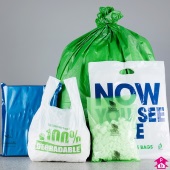
Irish customers can save with Polybags!
Welcome to Polybags.ie - the website dedicated to Irish customers from Polybags, the UK's number one polythene manufacturer.
At Polybags we have always done our very best to offer our valued Irish customers great savings, fast delivery and first class customer service.
With over one million polythene bags in stock, along with a massive range of plastic sheeting and tubing, plus a market-leading range of eco-friendly packaging, Polybags has a range of stock that can't be beaten.
Buy in Pounds, Save in Euros
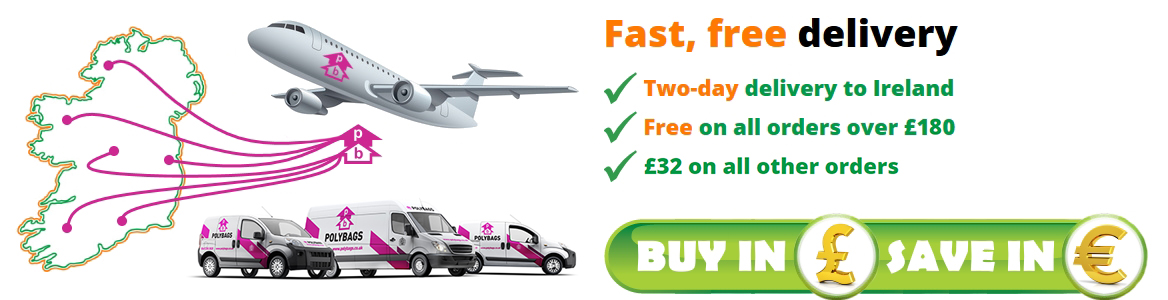
With excellent rates on large orders plus fast delivery from the UK to Ireland, Polybags offers great value to Irish customers who buy in bulk.
Whilst small orders have become more expensive post-Brexit due to new customs procedures and increased courier costs, bulk orders over £180 are still eligible for free delivery to Ireland.
What's more, the current weakness of Sterling means that your Euros go even further, offering extra value for money and substantial savings on bulk orders.
Plain polythene bags - fact or fiction?
Environmental bags only work properly when the grade, gauge and handling conditions all match the job. A compostable shopping bag or manufacture bag may suit a retailer trying to transport away from normal plastic, nevertheless the film still has to transport the load without tearing at the handle or stretching awkwardly amid packing. Thin material can fail on the line, while heavier stock may use more material than needed and make no proper contrast in service. The optimal results come from a sensible specification, dry storage and proper stock rotation, so the bag reaches the packer in the same condition it was meant to perform.
Waste bags need to be robust enough to cope with messy waste without splitting in the hand or leaking in the bin. A plant-based compostable film can work well here if the gauge is chosen properly and the sealing is consistent, because thin material that sees fine on the roll may fail once it is loaded with damp waste or carried for any distance. Good control in converting matters as much as the raw material, since weak seams and poor film tension can lead to handling damage long before the bags reach the stop user. A waste bag that grasps together cleanly saves cleanup, complaints, and unnecessary spoilage of the carton or dispenser pack.
Bubble Bags, Pollinatours, Bubbleatours, Trimmers, Hydroponics and more Hydro Hippy United Kingdom
Bubble bags need to be chosen for the job, because the gross mesh or seam strength can turn a simple extraction dash into a messy, underperforming batch. In hydroponic and garden-based processing, the bag has to grasp product while letting liquid transport freely, and that means the material, stitching, and drainage pattern all affect yield and cleanliness. If the mesh opens also far, fine material escapes; if it is also tight, flow slows and handling becomes clumsy. Good bag design also survives repeated wet use and washing without fraying at the edges. A well-manufactured bubble bag makes sorting cleaner and work easier on the floor.
Storopack Airplus – Protective Packaging machine – bubble wrap, null air cushion
Bubble wrap remains a practical selection when the risk is impact rather than compression, because the trapped air spreads knocks across a wider area of the pack. It works well around fragile products, nevertheless only when the film gauge and bubble size suit the article being packed; thin material can burst also easily, while above-heavy material wastes space and material. In a packing line, poor film tension or rushed wrapping can leave sharp corners exposed, which soon leads to handling damage in transit or on select faces. Used with the proper board grade carton and a sensible null occupy plan, it gives steadier protection and less product loss.
Movement in carrier bags only has meaning when the underlying bag spec is tight enough to transport the load without waste. A mature polythene suppliers bag may see simple, yet its proper performance relies on gauge control, handle shape and how consistently the film is manufactured at extrusion, because a weak edge or uneven thickness can fail at the till or split before the client reaches transport. A thinner bag can reduce material weight on paper, nevertheless poor film quality often leads to double-bagging, handling damage or returns in the store, which wipes out the saving. Good practice is to match the bag to the job and retain the tare weight down without sacrificing load security, and that is where the proper earn sits.
Display Bags 7,972 Results
Display bags perform well only when the film stays proper from the converting line to the shop shelf. A mono-polythene suppliers building with a consistent melt flow assists the bags feed cleanly through packing and sit flat in secondary packing, instead of coming out wavy or cloudy. That sort of control matters because uneven film tends to display up later as split seams, rubbing labels or a bag that sees old before it has even been displayed. A sensible gauge gives enough body for handling without utilising more resin than needed, so the pack retains its shape and transports through the warehouse with less problems.
What are the optimal shopping bags?
Retail bags have to be specified as handling items, not only as printed carriers, because small changes in gauge, stiffness and seal quality fast display up in shop and warehouse performance. A film that feels fine in a sample can behave very differently when thousands of units are nested, counted and pulled at the till, particularly if the slip level is gross or the handles are cut poorly. Thin gauge saves material, nevertheless if it clings, tears or folds badly it slows the counter and increases secondary bagging. A more consistent mono-material format normally gives better control on welding and recycled content, so the bag works as a proper consumable rather than a cost-effective afterthought.
polythene suppliers mailing bagson offer from stock
Coloured polythene suppliers mailing bags have to work harder than they see, because the gross film recipe can make a tidy product fail in handling. Good pigment loading requirements to sit alongside stable melt flow, otherwise the bag may see fine on the shelf nevertheless split when it drops through a chute or acquires overfilled in secondary packing. Gauge control matters as well, since a small change in thickness alters pallet weight, stack behaviour and the risk of bundles creeping below compression. A well-chosen high-density structure gives the stiffness needed for machine feeding, while seal edge strength and slip treatment retain production moving without snags or splits.
Grip Seal Bags - Write-on
Write-on grip seal bags in the 57 x 76mm size earn their retain where small items need to be kept together, seen at a glance, and moved through the system without muddle. The practical advantage comes from control on the bench and in the tray: screws, seals, test parts or retained samples stay separately identified, which cuts the chance of mixing batches or losing traceability. The grip seal has to close properly even when fine dust, powder or small offcuts are present, so film selection and seal profile matter above the plain appearance recommends. A sensible gauge gives enough resistance to puncture without turning the bag into wasteful overkill. Used well, the format saves time and avoids handling errours that are far more costly than the bag itself.
Plain polythene suppliers bags are a practical selection when the task is simple containment rather than display. Clear or normal film retains the contents easy to see, which assists with picking, stock checks and a fast visual check on the shop floor. A plain surface also avoids the complications that print or like finishes can cause on a packing line, so sealing and handling normally stay straightforward. That makes these bags well suited to secondary packing, small components and products that need to stay grouped and clean without additional fuss. For routine warehouse and production work, the plain option often gives the tidy, trouble-free result that matters most.
Poly bags and other popular polythene products
With over a million poly bags in stock along with a massive range of plastic film and sheeting on the roll, Polybags' range of polythene products is second to none.
There are too many ranges to list them all on this page, but here are a few of the most popular ranges with Polybags customers today:
Polythene bags
Polythene bags, also known as 'polybags' or 'poly bags', are strong, elastic, weather-resistant bags used in their millions for a massive variety of jobs in our day-to-day lives. They can be manufactured using either low-density (LDPE) or high density (HDPE) polyethylene which is either transparent or opaque - plain or coloured - depending on whether product visibility is required. Poly bags come in all shapes, sizes and styles, to suit a huge of functions and tasks. A number of these are outlined below.
Mailing bags
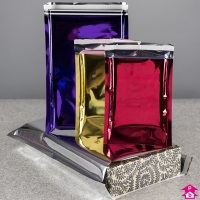
A fantastic alternative to traditional paper envelopes and parcel packaging, mailing bags are lightweight, strong and waterproof polythene envelopes that are ideal for posting items by mail or courier. Clear polythene mailing bags - with or without an external address label - allow you to display the contents of your mail, whilst high security mailing bags with tamper evident strips provide excellent content confidentiality.
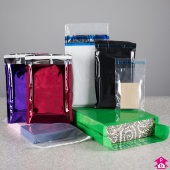
Polybags sell these and every mailing bag in between, in a huge range of colours from classic white through to bright, high-impact metallic mailers (pictured), or you can always personalise your own printed mailing bags to make your business really stand out from the crowd.
Carrier bags
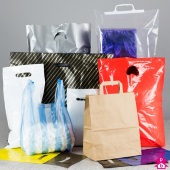
The most popular polythene bag in the world, carrier bags are a vital shopping accessory for consumers everywhere, providing a simple, ergonomic means of transporting purchased goods away from a store. Carrier bags are available in a huge range of styles to suit both the type of contents being sold and the image that the retailer wishes to portray.
Economy vest carrier bags - often known as crinkly carriers - are the staple of supermarket chains and larger retailers, made from strong but lightweight polythene that gets the job done at great value for money. Other popular carriers include patch handle, flexiloop and clip close carriers, whilst Polybags' printed carrier bag service helps many retailers to advertise their business and reinforce their brand with customers.
Resealable poly bags
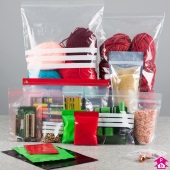
As the name suggests, resealable polythene bags can be sealed to protect bag contents, but then opened and resealed again when required. The most popular type of resealable poly bag is the grip seal bag, also know as the minigrip bag, which provides a convenient storage solution for a wide range of small- to medium-sized items and can be opened and closed through a squeeze-shut seal that runs along the top of the bag.
Other popular resealable bags with Polybags customers include stand-up pouches, header bags and other crystal clear retail display bags that can give a range of products some added sparkle on the shelf.
Waste bags & sacks
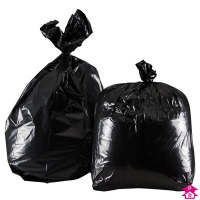
Whether you are raking up leaves in the garden, shredding paper in the office, removing rubble from the building site, colour-coding your recyclable waste disposal, collecting food waste in your kitchen caddy, picking up dog poo or simply disposing of the everyday contents of your kitchen bin, there's a bin bag or waste sack for you.
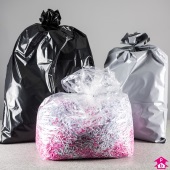
Polybags' range of black sacks, bin bags and waste sacks are made from recycled film but they all provide excellent bag strength so won't let you down, however tough the job.
Custom printed poly bags
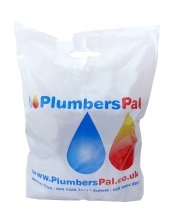
Many polythene bags can be manufactured and printed with a bespoke custom design, such as company logos or branding, to make the bag unique to the customer. The idea of printed poly bags is to entice people to make a purchase or remember your company.
Retail bags such as carrier bags, mailing bags and laundry bags are particularly popular for the addition of bespoke branding, as they provide companies with a fantastic marketing tool which links directly back to the customer to advertise their business and reinforce their brand. Simply choose your size, style and print options and Polybags will take care of the rest.
Anti-static poly bags
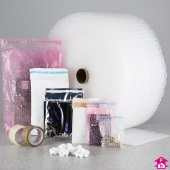
Static electricity is a major cause of damage to micro-electronic components, computers, and manufacturing equipment. To help avoid such problems, anti-static poly bags provide an excellent way of controlling electrostatic discharge (ESD). Polybags' range of anti-static packaging includes regular polythene bags, grip seal bags with an easy-to-use resealable opening and anti-static bubble bags that, alongside the ESD-protection, provide components with extra air-cushioned protection against physical damage that can happen during shipping, handling and storage.
Polythene sheeting
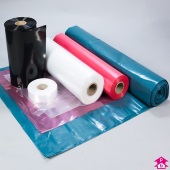
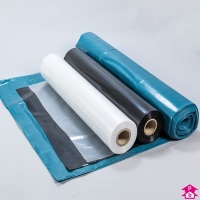
Polythene sheeting, also known as plastic sheeting, is a term used to describe sheets of polyethylene manufactured, sold and distributed on the roll to offer protection to wide surface areas.
Commonly referred to as 'builders rolls', plastic sheeting is popular in the building trade and with painters and decorators, as it can be used to protect floors and large items of furniture during renovation work from things like dust, debris, plaster and paint.
Polybags' wide sheeting is sold on 1m-wide rolls, which can be opened out to sheets of 2m or 4m wide, to provide excellent coverage and ensure surfaces are protected.
Speciality poly bags
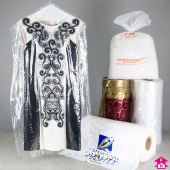
Whilst the range of poly bags outlined above will cater for the vast majority of needs, there are always some tasks that require a more specialised solution. Polybags' range of special use bags caters for those very jobs, covering everything from garment covers to vacuum bags, furniture bags to mattress covers and bread bags to fish bags.
You can also pick up a range of specialist waste sacks, manufactured to cater for specific waste disposal needs, including heavy duty builders' rubble sacks, strong compactor sacks and hazardous waste sacks. These include red asbestos sacks and yellow clinical waste sacks, manufactured from industry-standard polythene and clearly marked with warnings to ensure safe disposal.
Layflat tubing - make your own bags!
If you still can't find the right size bag for you, don't despair - Polybags have just the solution. You can create your own tailor-made bags to the exact size and shape you need using a roll of layflat tubing and a heat sealer. Available in a huge range of sizes from 2" to 48" wide - plus other widths available on request - and in either light, medium or heavy duty polythene, layflat tubing allows you to wrap even the most awkwardly-shaped items that don't fit into a regular poly bag.
Simply roll off as much tubing as you need, then cut and seal the polythene tube using the heat sealer to make your very own bespoke bags. If you want to close at both ends, simply place the contents in the bags and tape, clip or twist the top of the bag to seal.
Get 20% off Santa's favourite sacks!
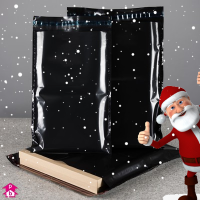
'Tis the season to be jolly, so we've got not one but TWO fantastic Polybags voucher offers to bring you some festive cheer this Christmas. Whether you need tough, secure mailing bags to send highly classified Secret Santa presents in the post, or a load of best value bin bags to clear up from all the festivities, these offers should both put a smile on your face.
You can get 20% off BRS120 economy black sacks on all orders over £30 with the voucher 'XMAS120' - just apply the voucher to your basket and the discount will be applied as soon as your order reaches £30. You can also get 20% off black secure mail sacks when you spend £75 or more. For this, apply the voucher 'XMASMAIL16' and shop away as normal.
Both offers are strictly one voucher per customer and are available for a limited time so, with effectively five for the price of four on two lots of fantastic sacks, you better hurry and get in soon otherwise Santa might snap them all up himself!
Beat the Christmas rush and mail your gifts early

Christmas is the busiest time of year for An Post, who handle up to 7.5m items, many of them polythene mailing bags, every single day in the run-up to Christmas - three times their normal amount.
As they launched their 2016 Christmas stamp collection, An Post's advice to customers was to beat the Christmas rush and prepare early for posting Christmas cards and presents to loved ones.
So, to help you get your mailing bags full of presents sent early this Christmas, here are An Post's all-important cut-off dates for posting items both within Ireland and abroad.
An Post's last posting dates for Christmas 2016
|
|
Last Posting Date |
|||
|
Domestic Mail |
Standard Letters |
Standard Parcels |
Registered Post |
Express Post |
|
Republic of Ireland |
Wed 21 December |
Wed 21 December |
Wed 21 December |
Thu 22 December |
|
Northern Ireland |
Tue 20 December |
Tue 20 December |
Tue 20 December |
Wed 21 December |
|
International Mail¹ |
Standard Letters |
Standard Parcels |
Registered Post |
International Courier² |
|
Great Britain |
Mon 19 December |
Mon 19 December |
Mon 19 December |
Wed 21 December |
|
Europe |
Mon 19 December |
Tue 13 December |
Mon 19 December |
Wed 21 December |
|
USA |
Mon 12 December |
Fri 9 December |
Fri 9 December |
Tue 20 December |
|
Rest of the World |
Wed 7 December |
Wed 7 December |
Wed 7 December |
Fri 16 December |
¹ International mail delivery times are estimates and subject to local postal operator delays.
² International Courier Service is only available at selected Post Offices. For further information, visit anpost.ie/internationalcourier